Pest control in Laurel, MD works when the pest is correctly identified first — a German cockroach in a shared-wall townhouse, a subterranean termite in a 1950s Old Town basement and a house mouse pushing in behind a dryer vent each need a different fix. Most people searching Pest Control Service Laurel are standing in the kitchen at 10 p.m.
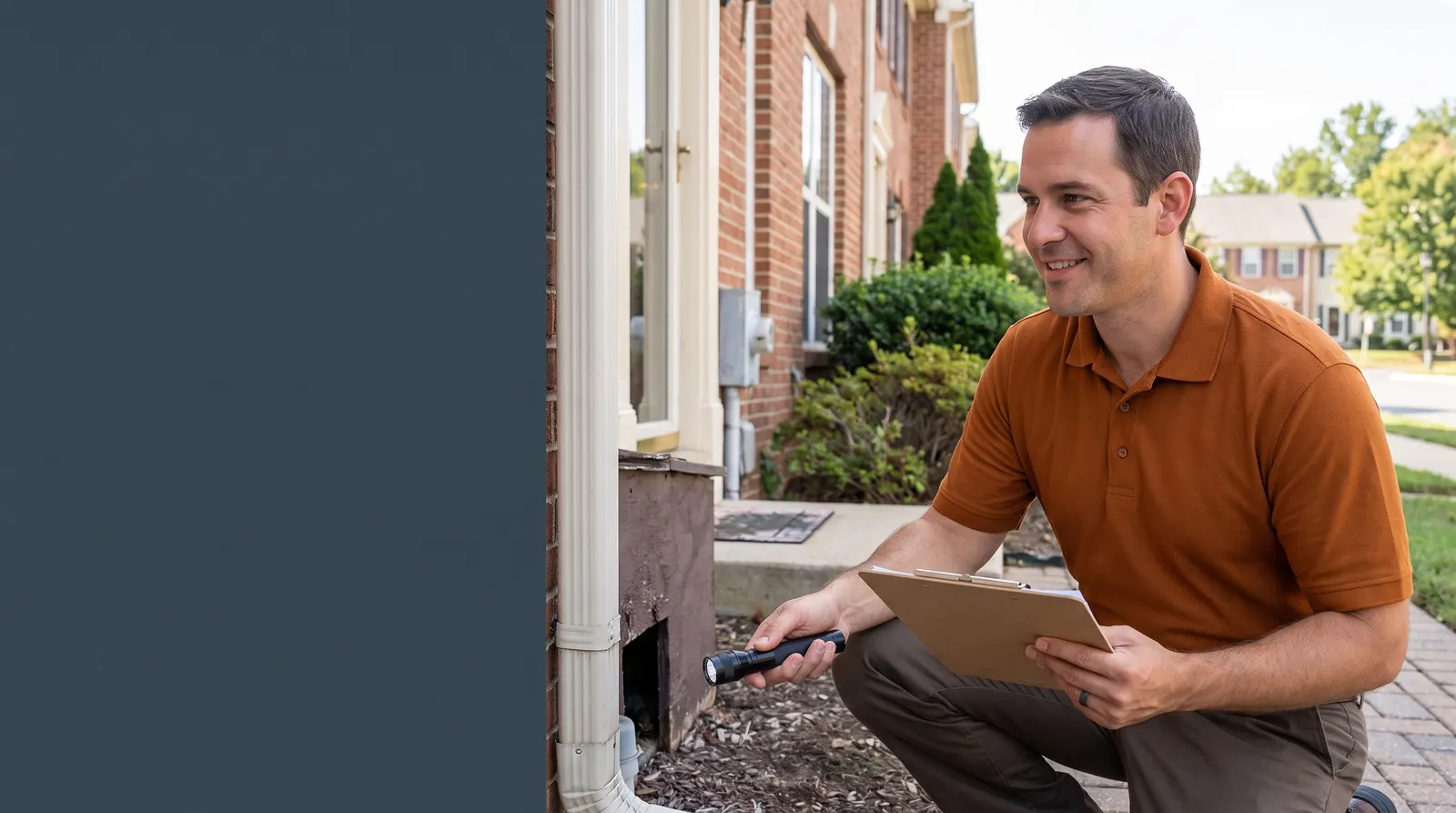
A pest control service in Laurel, MD is a residential and small-commercial provider that inspects a property to identify which pest is present, locates the entry points and moisture or food sources feeding the problem, then applies targeted treatment and follow-up monitoring instead of a single blanket spray.
Every service reflects the same meticulous attention to detail — whether it's a single job or a larger pest control service project across Laurel.
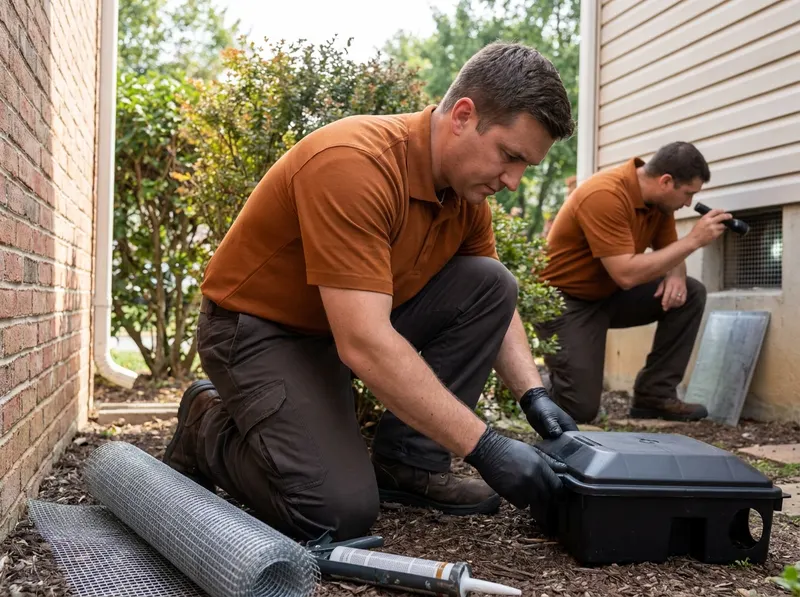
Rodent control in Laurel starts by reading the evidence: droppings size and location, rub marks along baseboards, gnawed corners on cardboard, and the grease trails mice leave on floor joists. Technicians set traps and monitors in the runways rodents actually use — under sink cabinets, behind ranges and dryers, along garage walls and in crawlspaces — then return to check catch and adjust placement rather than leaving bait blocks and hoping. Interior work in occupied Laurel homes is planned around kids and pets, with tamper-resistant placements where children or animals have access. Trapping and monitoring across two or three visits typically runs $400 to $900. In older Old Town Laurel houses and split-levels in Steward Manor and Bond Mill, the same three or four entry points repeat: crawlspace vents, dryer vent flaps, garage door bottom corners and utility penetrations behind the water heater. Call (240) 917-2713 if you are hearing scratching in a ceiling or finding droppings under a sink.
View details →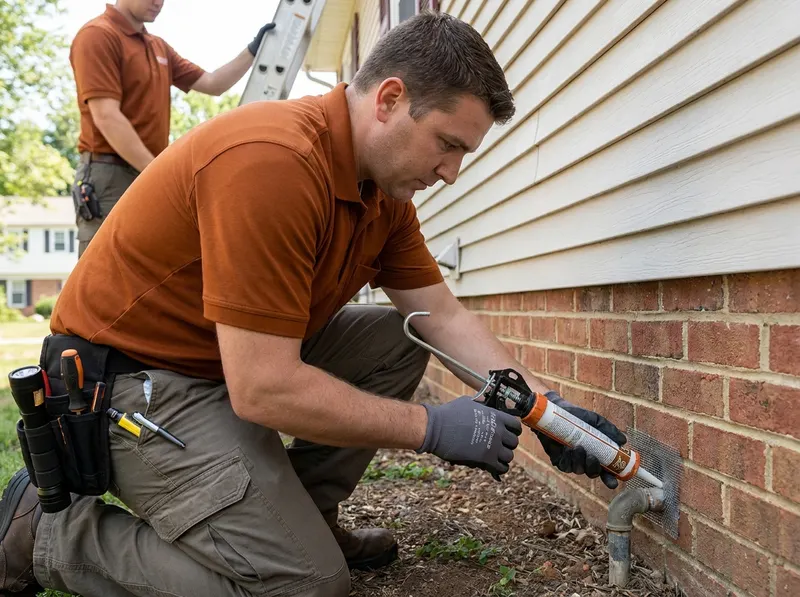
Exclusion is the physical repair work that closes the openings mice and rats use to get inside a Laurel home, and it is priced separately from trapping because it is a different job. A mouse fits through a gap the width of a pencil, so the inspection looks at sill plate seams, the corners of garage door sweeps, dryer and bath fan vent flaps, gaps around hose bibs and gas lines, crawlspace vent screens, and the space where a deck ledger meets siding. Sealing uses hardware cloth, sheet metal, mortar or foam-and-mesh combinations chosen for the location — steel wool alone in a wet foundation gap fails within a year. September is the right month for exclusion in Laurel, before the first cold snap pushes rodents indoors in October. Typical exclusion work runs $500 to $2,500 depending on how many openings the structure has and whether crawlspace access is tight.
View details →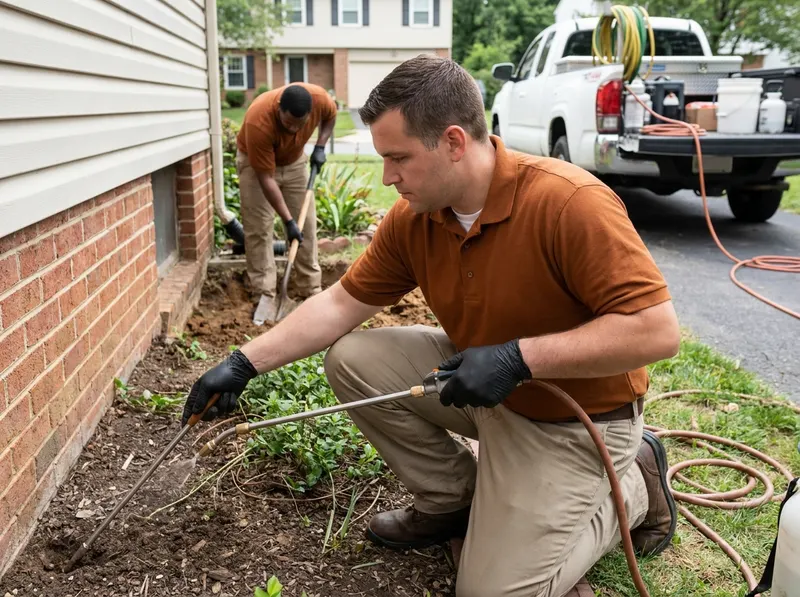
Subterranean termites are the pest that costs Laurel homeowners real money, and a liquid soil treatment is the fastest structural response for a home with a diggable perimeter. The inspection checks the sill plate, band joist, basement window frames, garage door jambs and any wood in soil contact, plus mud tubes on foundation walls and blistered paint that hides damaged wood. Treatment involves trenching and rodding soil along the foundation and drilling through slabs, patios or porch aprons where the soil under concrete has to be reached. A typical single-family Laurel home falls in the $1,200 to $3,000 range, driven by linear feet of foundation and how much concrete needs drilling. Swarmers on an interior windowsill on a warm, damp March or April day mean an active colony, not a passing insect from outside. Text a photo of the wings or the tubes to (240) 917-2713 for a same-week look.
View details →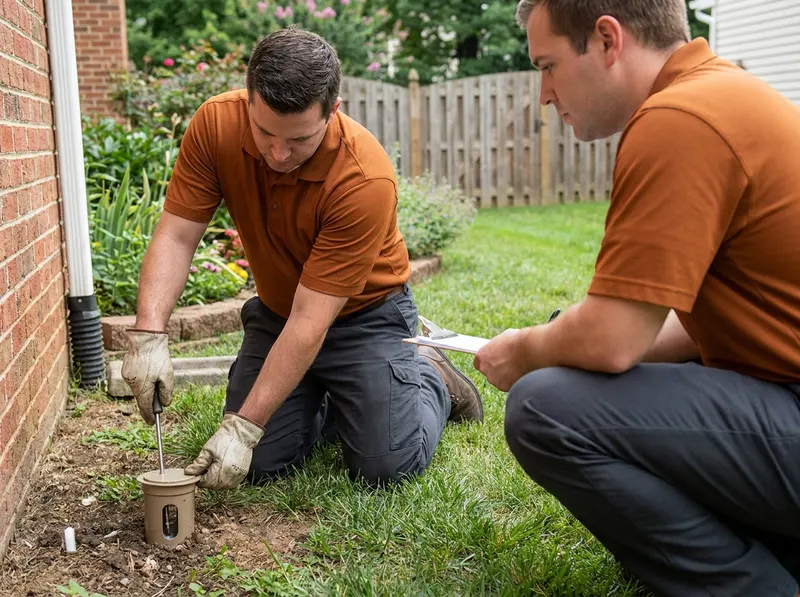
A bait station system rings the home with in-ground stations that termite foragers find on their own, and it suits Laurel properties where trenching is impractical. Townhouse rows in Russett, Emerson and Patuxent Greens often have four to eight feet of rear yard, mature foundation plantings, brick patios or a deck built tight to the siding — conditions where a liquid barrier means cutting through hardscape. Stations are installed at set intervals around the structure, then inspected on a schedule so hits are documented and bait is replenished as the colony feeds. First-year cost generally runs $900 to $1,800 depending on the perimeter length and the number of stations required. Bait works over weeks to months rather than days, which is the honest trade-off for avoiding drilling. Ongoing monitoring is what makes it work, so the inspection interval is written into the scope before installation.
View details →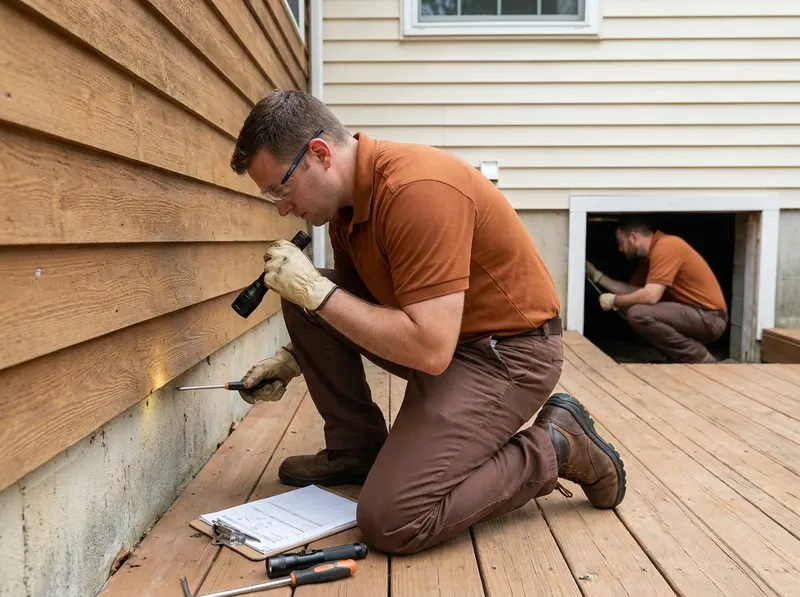
A wood-destroying insect inspection documents evidence of termites, carpenter ants, powderpost beetles and old-house borers for a real estate transaction, and demand for it stays steady in Laurel year-round because of Fort Meade and BWI-area moves. The inspector examines accessible areas — basement sill plates and band joists, crawlspace framing, garage door frames, exterior siding at grade, and any visible wood-to-soil contact — and reports both active evidence and prior damage or prior treatment. Findings often include conditions conducive to infestation: mulch heaped against siding, downspouts discharging at the foundation, a crawlspace with standing moisture, or firewood stacked against a wall. Inspection visits fall in the $250 to $400 range for a typical Laurel single-family home or townhouse. Reports are written plainly so an agent, a buyer and a lender can all read the same conclusion without interpretation.
View details →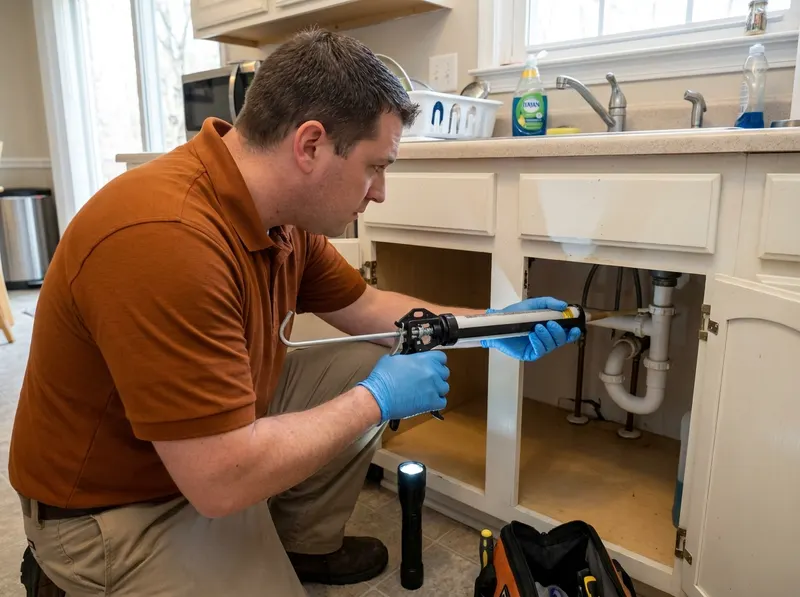
German cockroaches live within a few feet of food, water and warmth, which is why treatment concentrates on kitchen and bathroom harborage instead of open floors. The inspection pulls the range drawer, checks the motor housing of the refrigerator, the hinge voids of cabinet doors, the underside of the sink, dishwasher edges and the seam behind a backsplash, and sets monitors to measure whether the population is dropping. Control uses gel bait placed in cracks, an insect growth regulator to break the reproductive cycle, and void treatment where roaches are traveling — a heavy contact spray scatters a German roach population into wall voids and, in a shared-wall Laurel townhouse or apartment, straight into the neighbor's unit. Programs run two to three visits at $450 to $1,100. Prep matters: emptying the under-sink cabinet and clearing the counters before the first visit measurably improves the result.
View details →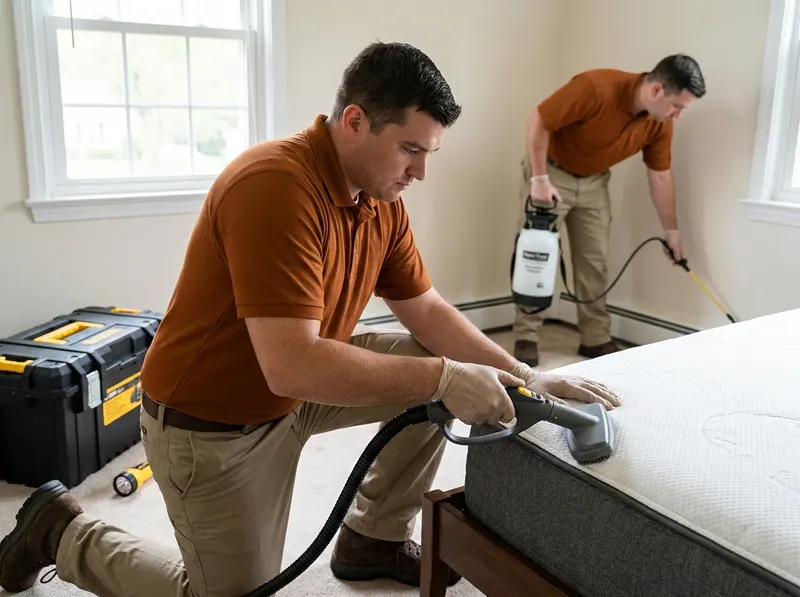
Bed bug work is priced per room at $400 to $900 because the scope depends on where the evidence actually is, not on the square footage of the house. The inspection looks at mattress seams and tag, box spring corners and the underside of the frame, headboard bolt holes, the piping of upholstered chairs and sofas, the edge of carpet at the baseboard, and nightstand joints — looking for live bugs, shed skins, eggs and the dark spotting on fabric. Treatment combines targeted crack-and-crevice application, mattress and box spring encasements where appropriate, and follow-up visits timed to the egg hatch cycle. Clutter is the single biggest cost driver, so bagging laundry and clearing the floor around beds before the visit shortens the job. Treating only the bedroom when a living room recliner is also involved moves the problem twenty feet, so the whole sleeping and sitting area gets inspected in Laurel homes.
View details →
Ant control in Laurel starts with identification, because the treatment splits by species. Odorous house ants trailing along a kitchen counter or dishwasher line respond to non-repellent bait carried back to the colony; a repellent spray on the trail only breaks the colony into satellite groups. Carpenter ants, larger and often found with coarse sawdust-like frass below a window frame or deck ledger, mean moisture-damaged wood somewhere, so the inspection follows the water — a leaking gutter seam, a failed door threshold, siding that stays wet behind a shrub. Pavement ants pushing up through basement slab cracks and expansion joints get treated at the slab edge and exterior perimeter. Ant calls climb from April through June as the ground warms and Laurel yards take their first heavy rains. One-time interior and exterior treatment typically runs $250 to $425.
View details →A pest control service in Laurel, MD is a residential and small-commercial provider that inspects a property to identify which pest is present, locates the entry points and moisture or food sources feeding the problem, then applies targeted treatment and follow-up monitoring instead of a single blanket spray.
You get a firm, itemized quote for your pest control service before any work begins — no surprises, no pressure.
Careful prep, tidy work, and a full cleanup when we are done. We treat your home and belongings like our own.
The same trusted, background-checked team from the first call to the final check.
The first real decision is one-time treatment versus a recurring program. If you have a single visible problem — one wasp nest under a soffit, a line of odorous house ants along a kitchen counter, camel crickets in a damp basement — a one-time interior and exterior treatment at $250 to $425 usually settles it, and you can call again if it returns. If you live on a wooded lot in West Laurel or Bond Mill, or back up to the Patuxent floodplain where pressure is constant from outside, a quarterly program at $250 to $375 per visit costs more over a year but keeps the exterior barrier and bait placements current through all four seasons. The trade-off is simple: one-time work is cheaper today and reactive, recurring work is predictable and preventive. For termites, the choice is a liquid soil treatment versus a bait station system. If you want the fastest structural protection and you have a normal, diggable perimeter, a liquid barrier at roughly $1,200 to $3,000 for a typical Laurel single-family home treats the soil the colony travels through. If your foundation is wrapped in patio slabs, mature landscaping or the tight rear yards common in Russett and Emerson townhouse rows, a bait station system at about $900 to $1,800 for the first year avoids heavy trenching and drilling but works over weeks to months as the colony feeds. The trade-off is speed and disruption versus a gentler install with ongoing monitoring. For rodents, trapping and exclusion are two different purchases and both matter. If you want the activity in your kitchen stopped now, trapping with monitoring across two or three visits at $400 to $900 removes the animals currently inside. If you want them to stay out, exclusion — sealing gaps at sill plates, dryer vents, garage door corners, utility penetrations and crawlspace vents — is the part that actually ends the cycle, and it runs $500 to $2,500 depending on how much of the structure needs work. Trapping alone in a shared-wall home is a treadmill; exclusion is the fix. Roaches and bed bugs both reward patience over a single heavy spray. German cockroach control uses gel bait, growth regulators and monitors over two or three visits at $450 to $1,100, because a contact spray scatters a population into wall voids and neighboring units. Bed bug treatment is priced per room at $400 to $900 and depends on clutter and how many rooms show evidence — treating only the bedroom when the sofa is also involved simply moves the problem twenty feet. If you rent, or you own one unit in a South Laurel or Russett building, say so on the phone: shared-wall infestations need the neighboring units and the building's schedule factored into the plan, and pretending otherwise wastes your money. Mosquitoes and ticks are a yard decision, not a house decision. If you have one outdoor event, a single treatment at $250 to $400 knocks the population down for that window. If you want usable evenings from June through September near Granville Gude Park, Riverfront Park or the Refuge edge, a seasonal series of treatments plus removing standing water in gutters, tarps, birdbaths and kid toys is what holds. The trade-off is one-day relief versus a season of appointments. There is also a decision about how much of the house gets touched. If the evidence is confined to one room — a single nest, one kitchen ant trail, bites in one bedroom — a targeted treatment of that area and the adjacent exterior wall is the right scope and the cheaper one. If evidence shows up in two rooms on different floors, or in a finished basement and a first-floor kitchen at the same time, the pest is almost certainly moving through wall voids, plumbing chases or a crawlspace, and a whole-structure inspection is what prevents a second and third service call. The inspection is the product; the treatment is what the inspection tells you to do. That is why the price for a Laurel home is quoted after someone has looked in the crawlspace, behind the range and along the sill plate — not from a phone script. Finally, timing is a real choice. If your closing date is set and a lender or buyer needs a wood-destroying insect report, that inspection is scheduled on the transaction's clock and cannot wait for a better season. If you are a homeowner with a slow, non-urgent nuisance — spiders in a garage, cluster flies in an attic window, camel crickets in a laundry room — winter and midwinter slots are the easiest to get and often the calmest way to get thorough interior work done. The trade-off is convenience versus urgency, and both are honest reasons to book.
Every project gets a firm, written price after a free on-site visit. Ranges below for orientation.
Tell us about your pest control service job and we'll send a clear, written quote — usually the same day. Or just call and talk to a real Laurel pro.
(240) 917-2713Free estimates for Laurel & the surrounding area.
 Trevixa Pest Solutions