Laurel bed bug calls almost never come from the yard or the crawlspace — they come home with people. A returned suitcase, a college dorm move-in, a rideshare or MARC Camden Line commute to DC or Baltimore, a used…
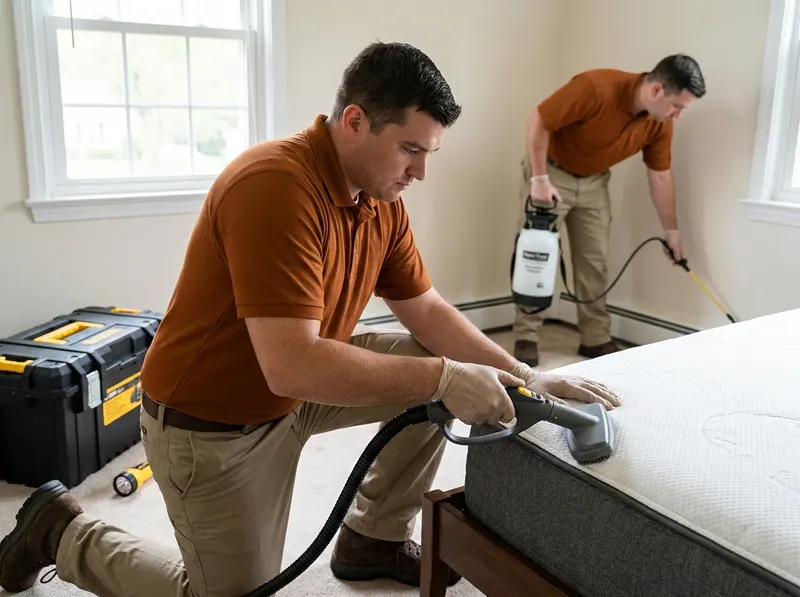
Laurel bed bug calls almost never come from the yard or the crawlspace — they come home with people. A returned suitcase, a college dorm move-in, a rideshare or MARC Camden Line commute to DC or Baltimore, a used dresser or sofa picked up along the Route 1 corridor. That matters for treatment strategy: bed bugs stay within a few feet of where a person sleeps or reclines for hours, so the productive work happens in a tight radius around the bed and the couch, not in a general perimeter spray. A whole-house fog or a store-bought aerosol does not reach bed bug eggs tucked in a box spring seam or a headboard bolt hole, which is why DIY attempts so often look successful for ten days and then fail.
The decision most Laurel homeowners face is between a multi-visit residual program and a single-event heat treatment. A residual program — targeted application to harborage points, then a follow-up two to three weeks out to catch newly hatched nymphs — fits the majority of cases: one or two affected bedrooms, an infestation caught early, a household that can handle a laundry-and-declutter prep list. Heat treatment is a single high-temperature event with no prep chemicals and no repeat visit, and it is the stronger fit when the infestation is heavy, when it has spread across three or more rooms, or when a tenant turnover deadline leaves no room for a three-week cycle. The trade-off is straightforward: heat costs more up front and requires the home to be empty for most of a day; residual treatment costs less but depends on you completing prep and letting the second visit happen on schedule. We tell you which one we recommend at the inspection, in plain terms, before anything is quoted.
Shared walls change the plan. In the townhouse rows of Russett and Emerson, the stacked units around Laurel Lakes, and the older converted apartments near Main Street and Old Town Laurel, bed bugs travel along baseboards, plumbing chases and outlet boxes between units. Treating one unit while an adjoining unit is untreated is how a household ends up paying twice. When the layout suggests migration, we inspect the shared wall side carefully, document what we find, and give landlords and condo owners something written they can take to the neighboring tenant or the property manager. Detached homes in Bond Mill, West Laurel, Steward Manor and Montpelier are usually a self-contained problem, and the inspection focus shifts to guest rooms, finished basements and any furniture that came in secondhand.
What we ask of you is small but not optional: strip and launder bedding on high heat, bag it clean, clear the floor around beds, and pull nightstand drawers open so harborage points are reachable. Do not throw the mattress out to the curb before the inspection — a discarded mattress often means the bugs simply move to the couch, and it removes the clearest evidence of how far the infestation has spread. Follow-up matters more here than with any other pest we handle in Laurel, and the second visit is part of the plan from day one, not an upsell.
Every job gets a firm, written price after a free on-site visit.
Tell us about your bed bug treatment job in Laurel and we'll send a clear, written quote — usually the same day.
 Trevixa Pest Solutions