Laurel gives termites two easy openings. Slab-on-grade townhomes and newer detached houses in Russett, Emerson and North Laurel put wood framing within inches of treated soil, and any crack at the garage slab, front…
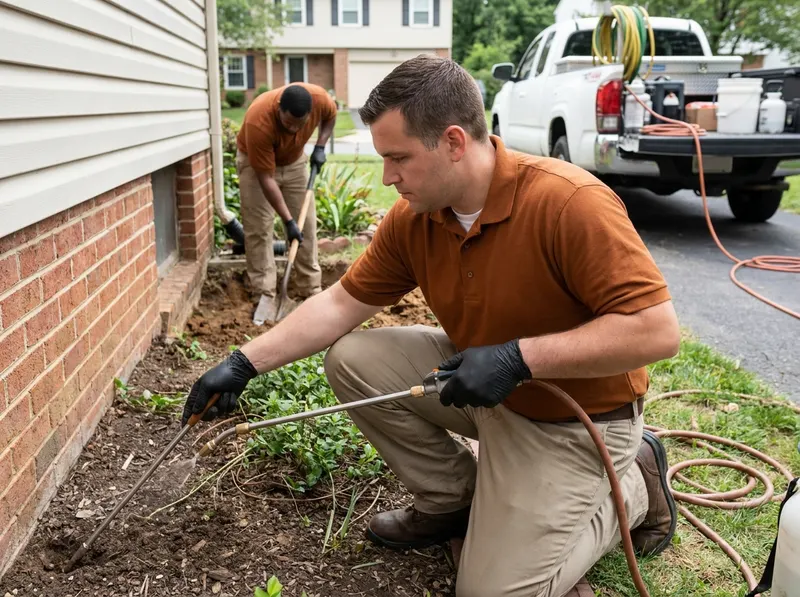
Laurel gives termites two easy openings. Slab-on-grade townhomes and newer detached houses in Russett, Emerson and North Laurel put wood framing within inches of treated soil, and any crack at the garage slab, front stoop or utility penetration becomes a hidden highway. Older housing along Main Street Laurel and in Bond Mill, Steward Manor and Montpelier tends toward block foundations, crawlspaces and decades of mulch, railroad ties and fill dirt stacked against the wall — soil contact that no amount of interior spraying reaches. Along the low ground near Patuxent Greens and Riverfront Park, and on the wooded lots in West Laurel near Rocky Gorge Reservoir, the soil simply stays damp longer, and damp soil keeps foraging colonies close to the house year-round. Swarming season in the Laurel area typically runs March through May, usually on a warm, humid afternoon after rain, and a pile of discarded wings on a windowsill or in a basement stairwell is the single most common reason homeowners call.
The inspection comes first because the finding changes the job. Mud tubes climbing a basement wall in Old Town Laurel, a hollow-sounding baseboard behind a Laurel Lakes powder room, and swarmers coming from a single garage expansion joint are three different treatment plans, not one price. We identify the species, map where soil contact is happening, and note the moisture source feeding it — a downspout dumping at the corner, a crawlspace vent buried by grade, a flower bed graded above the brick line. Liquid soil treatment works by creating an unbroken treated zone in the soil around and beneath the structure, so gaps matter more than gallons: an untreated stoop, an unreachable stretch behind an AC pad, or a shared townhouse wall left out of the plan is where activity returns.
Liquid versus baiting is the real decision. Liquid soil treatment fits when there is active, visible infestation and you want it stopped now — non-repellent termiticides let foragers pass through and carry the material back, and the treated soil keeps working against re-entry. It fits attached homes in Russett or Steward Manor where you can only control your own footprint and want a hard line at your foundation. Baiting fits better where trenching and drilling would be impractical or unwise: heavily hardscaped courtyards, a well or cistern on a West Laurel lot where label setbacks limit soil application, or a homeowner who wants monitoring instead of disruption. The trade-off is honest — liquid means digging a trench through mulch beds and drilling a patterned line of holes in concrete slabs, which are patched afterward but visible on close inspection. Bait systems are far less invasive and can take months to reduce a colony.
For townhouse and condo owners, we say plainly what a perimeter treatment can and cannot do: treating your unit protects your unit's soil line, not your neighbors'. Where a row of attached homes in South Laurel or Emerson shows activity across multiple units, treating the full run is the only approach that removes the shared-wall path, and that usually means an HOA or a coordinated neighbor conversation. We will tell you that on the inspection rather than after. If a lender or settlement in Laurel requires wood-destroying insect paperwork, mention it when you call so we can confirm what we are able to provide for that transaction.
Every job gets a firm, written price after a free on-site visit.
Tell us about your termite inspection & liquid soil treatment job in Laurel and we'll send a clear, written quote — usually the same day.
 Trevixa Pest Solutions