Order this inspection when a contract, a lender or a VA/FHA-style loan condition requires documented proof of the wood-destroying insect status of a specific address. Order a full termite inspection and treatment…
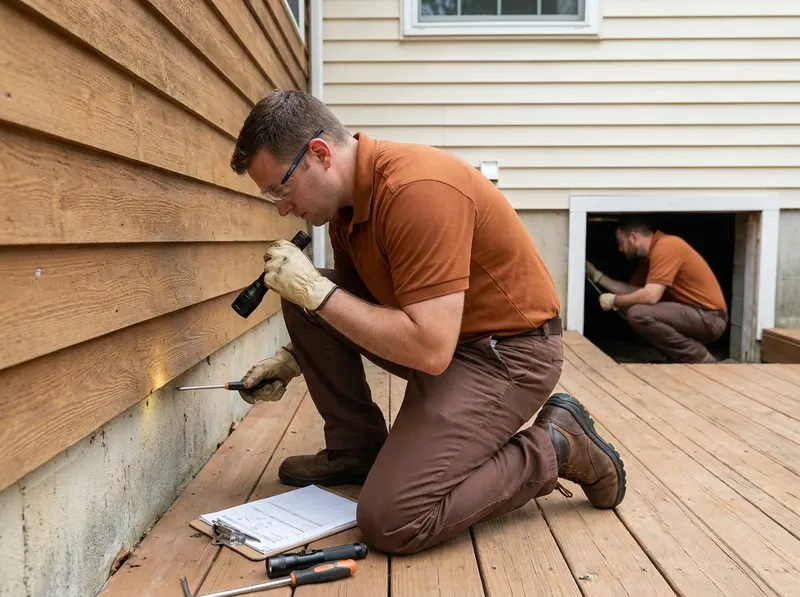
Order this inspection when a contract, a lender or a VA/FHA-style loan condition requires documented proof of the wood-destroying insect status of a specific address. Order a full termite inspection and treatment instead when you already know you have swarmers on the windowsills or mud tubes on the block and you want the colony ended — that is a different job with a different scope. The trade-off is honest: the home sale report buys you a dated, signed record a settlement table will accept, and it deliberately stops at what is visible and accessible. Finished basement drywall in a Steward Manor rancher, a sealed crawl hatch in Old Town Laurel, or a stacked storage room in a Laurel Lakes townhouse all get noted as obstructed rather than guessed at.
What we look for shifts by neighborhood and housing type, and that matters when you are reading the form. Older frame homes near Main Street and the Montpelier area put wood close to grade — porch posts, sills behind decades of added flower beds, and mulch piled over the block line are the classic conducive conditions we measure and photograph. West Laurel and Patuxent Greens properties on wooded, damp lots toward Rocky Gorge Reservoir and the Patuxent bottomland show more moisture-driven findings: soft rim joists, crawl space fungus, and beetle exit holes in older joist stock. Newer slab-on-grade townhomes in Russett and Emerson usually come down to the bath trap openings, garage-to-living-space framing, and shared exterior walls, which is why we walk the full unit footprint rather than just the front and back. North Laurel addresses that sit in Howard County get the same form; the county line changes the settlement company, not the inspection.
If we find something, the report says exactly which of three things it is: active infestation, evidence of previous infestation, or visible damage from either. Those are separate boxes on the NPMA-33 and they carry different consequences at the table, so we do not blur them. When treatment is warranted, we quote it as its own line item — never bundled into the inspection fee — and a re-inspection letter after treatment is available if the lender asks for one. We do not perform structural repairs, and we do not sign off on the load-bearing condition of damaged framing; that call belongs to a contractor or engineer, and the report will say so plainly.
This inspection is also not a home inspection. It does not cover roofing, electrical, HVAC, radon or general condition. Sellers in Bond Mill and South Laurel often order it early, before listing, so a termite finding shows up on their schedule instead of during a two-week contingency window. Buyers usually order it after ratification. Either way, the report is written for the file: structures listed, obstructions listed, findings dated, and language a lender's reviewer can act on without calling for clarification. We identify it first — then, if there is something to end, we tell you what ending it costs.
Every job gets a firm, written price after a free on-site visit.
Tell us about your wood-destroying insect inspection (home sale report) job in Laurel and we'll send a clear, written quote — usually the same day.
 Trevixa Pest Solutions