The single most common mistake we correct in Laurel homes is a repellent spray applied to a trail of odorous house ants. That species — the one that smells faintly of coconut or blue cheese when crushed — reacts to…
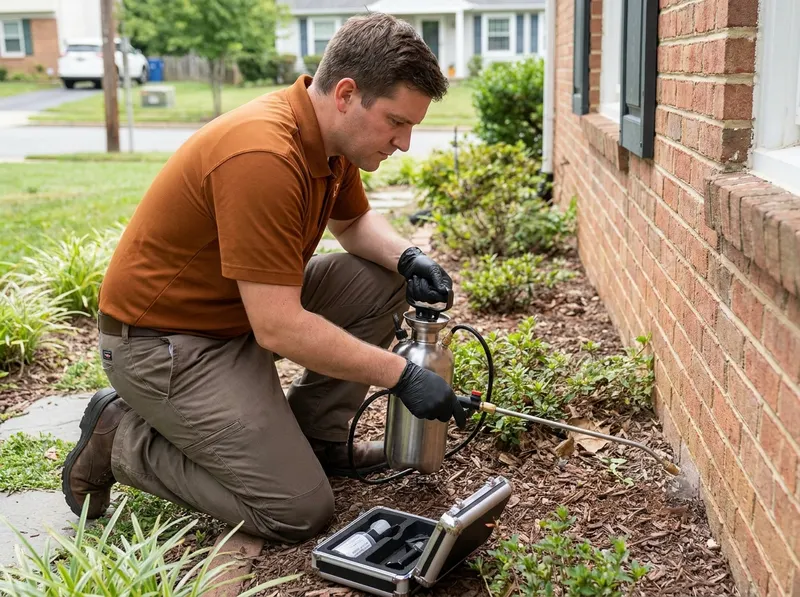
The single most common mistake we correct in Laurel homes is a repellent spray applied to a trail of odorous house ants. That species — the one that smells faintly of coconut or blue cheese when crushed — reacts to repellent contact products by budding: the colony splits and satellite nests scatter deeper into wall voids and under insulation. Two weeks later there are trails in three rooms instead of one. We bait first and spray selectively, because non-repellent bait gets carried back to the queen and the spray does not. That distinction is the whole job.
Where the ants come from depends heavily on your part of Laurel. In Steward Manor, Bond Mill and Old Town Laurel, older foundations, stone-and-mortar joints and settled concrete walks give pavement ants a straight path in — you'll see the little sand piles pushed up through sidewalk expansion joints and driveway seams by late spring. In the slab-on-grade townhomes of Russett, Emerson and Patuxent Greens, ants exploit the gap where the slab meets the siding, then follow plumbing lines to the kitchen sink and dishwasher. In West Laurel and along the wooded edges near Rocky Gorge Reservoir and the Patuxent Research Refuge, mature oaks and long-standing mulch beds put carpenter ants and field ants right against the house, and rain events on the Patuxent floodplain reliably push foraging ants indoors within a day or two. Montpelier and North Laurel homes with deck ledgers, bay-window sills or older window trim are the ones where we most often find carpenter ant frass — coarse sawdust with insect parts in it — under a damp piece of wood.
Here is the decision that matters most: a nuisance ant problem and a carpenter ant problem look similar and are not the same job. If you're seeing steady interior trailing to a food source and no wood damage, exterior baiting plus perimeter and entry-point work is the right, lower-cost path. If you're finding coarse sawdust piles, hollow-sounding trim, or large black ants active at night around a chimney chase, deck attachment or bathroom wall, the ants are a symptom of wet wood — and treating the ants without fixing the water means they return. In that case we treat, then tell you plainly which board, flashing or gutter run needs attention. We also check one thing homeowners get wrong every spring: winged ants have pinched waists and elbowed antennae, while termite swarmers have straight antennae and broad waists. If what landed on your Laurel windowsill is a termite, ant control is the wrong service and we'll say so on the spot.
Shared walls change the plan. In Laurel townhomes and condo buildings, a colony can nest in a neighbor's wall void or in the common landscaping and forage into your unit. We treat your unit thoroughly and place exterior bait where the colony forages, and we're direct with you about what interior-only work can and cannot accomplish when the nest is on the other side of the drywall. Landlords and HOA-managed buildings around Laurel Lakes and South Laurel get the same honest read: coordinated treatment across adjoining units beats one aggressive spray in a single kitchen. We identify it first, then end it.
Every job gets a firm, written price after a free on-site visit.
Tell us about your ant control job in Laurel and we'll send a clear, written quote — usually the same day.
 Trevixa Pest Solutions